Archive

Posts Tagged ‘Children’

Minnesota Reviews Child Custody Laws

January 29th, 2009 4 comments

Minnesota is considering passing legislation to make shared physical custody of children between both parents a presumption of the court. Under the current law, the courts presume that parents will share legal custody. But physical custody is up for grabs. Detractors of the current law believe that it sets up families for bitter custody disputes and frequently results in fathers and children being short-changed of time with each other.

Read more…

Tennessee Child Custody Case Invokes 14th Amendment

January 29th, 2009 13 comments

A Tennessee child custody case involving a little girl named Kate Hopkins and her father Jeremy Hopkins is developing into a test of the 14th Amendment equal protection by the law. If the 14th Amendment is found to apply to child custody rights as it appears it should, then it follows that the apparent and widespread bias of the US courts against fathers is unconstitutional. Therefore this case could affect child custody decisions across the entire United States.

Read more…

CPSIA Draws Mass-Media Criticism

January 24th, 2009 No comments

(Click here for more coverage of CPSIA.)

The February 10, 2009, start of enforcement of the Consumer Products Safety Improvement Act of 2008 continues to draw closer as the US federal government still has its head stuck in the sand regarding the mess the law is about to make.

On January 22, 2009, the book publishing industry met with the Consumer Products Safety Commission to give them evidence of 150 test results from finished children’s books to show that lead is not a reasonable concern for such items. But there is still no indication of what CPSC will do about the matter, if anything.

Read more…

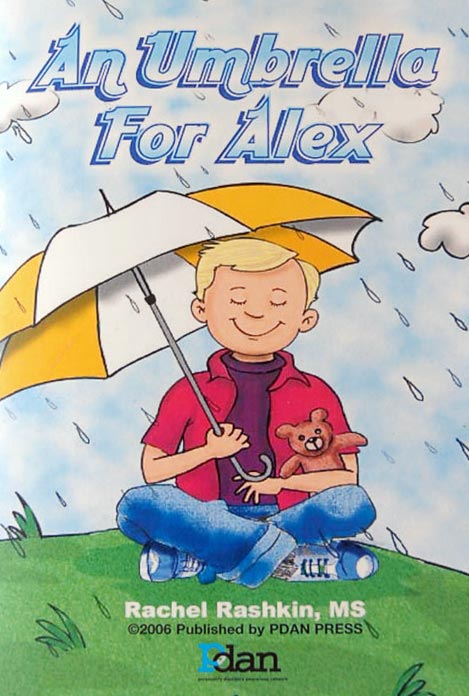
Book Review: “An Umbrella for Alex” by Rachel Rashkin, MS

January 22nd, 2009 2 comments

Personality Disorder Awareness Network is now selling a children’s book entitled An Umbrella for Alex. It is the first book we’ve seen intended for children with a parent afflicted with Borderline Personality Disorder. The book is described as:

An Umbrella for Alex

An Umbrella for Alex

PDAN is proud to announce the publication of its first book, “An Umbrella for Alex,” by Rachel Rashkin, MS. It tells the story of how a young boy learns to understand and cope with his mother’s BPD illness.

Written to be read with a therapist or parent, the book reassures affected children that they did not cause and are mot responsible for a BPD parent’s volatile behavior.

Read more…

Book Publishers Up in Arms Over CPSIA

January 16th, 2009 No comments

(Click here for our complete coverage of CPSIA.)

The book publishing industry is joining the American Library Association in questioning the wisdom and intent of applying CPSIA lead and phthalate standards to children’s books. The American Association of Publishers (AAP) and Children’s Book Council (CBC) are among the groups starting to lobby the Senate and House to clarify and/or revise CPSIA to exempt conventionally printed hardcover and paperback books.

Many children’s books have already moved to soy-based organic inks. There is little or no evidence of lead or phthalates being a problem in older inks or in paper, cardboard, and glues used for printing most books. While the industry agrees that specialty books that have plastic and metal parts might warrant testing according to CPSIA limits, it strongly disagrees with the necessity of such testing for conventional books books printed on paper and cardboard.

Read more…

February 10, 2009 = National Bankruptcy, Censorship, and Landfill Dumping Day

January 14th, 2009 No comments

(Click here for our complete coverage of CPSIA.)

Unless the US government acts soon, on February 10, 2009, life as we know it in the United States may become extremely bizarre. Imagine a nation in which it is illegal for:

  • Children age 12 and under to enter libraries or attend schools or daycare facilities unless those schools and daycare facilities have no books or toys.

  • Books and toys for children age 12 and under can only be sold by mass-merchants because home and small businesses and manufacturers cannot afford the testing costs to verify paper, cardboard, glue, and other components do not have illegal levels of lead.

  • Only major publishers running huge print-runs can print children’s books because only they can afford the testing costs.

  • If you can find anybody willing to risk selling you a used children’s book, either they will be criminals or buying a used children’s book will cost upwards of $150 per title because each book will have to be individually tested for lead and phthalates.

  • Tens of thousands of US home and small businesses which have made a major portion of their sales from children’s products go out of business and file for bankruptcy as their inventories go from having value to being worthless because they cannot be sold.

This is all due to the Consumer Product Safety Improvement Act of 2008. The new law requires that products intended for use by children ages 12 and under must meet new standards for lead and phthalate content or they cannot be sold starting February 10, 2009. The law does not have any grandfather provisions for products made prior to February 10, 2009. It apparently affects all products intended for use by children age 12 and under. And it is being interpreted as affecting operations that sell, lend, or allow the use of children’s products by children ages 12 and under.

Read more…

Child Product Lead Law Leads to Government Censorship?

January 12th, 2009 No comments

(Click here for our complete coverage of CPSIA.)

As reported last week (see Government Bans Sale of Used Children’s Clothing and Toys !?!), the impending enforcement of the Consumer Products Safety Improvement Act of 2008 starting on February 10, 2009, will change the landscape for children’s clothing and toy sales in the United States. New 600ppm limits on lead will be enforced immediately, and those limits will be lowered to 300ppm and next to 100ppm. Phthalates used to soften plastics must comprise less than 0.1% of the product content. Sellers must be able to show the items they are selling have passed safety tests for lead and phtalate content or they cannot sell the products. The new regulations pertain to products intended for use by children age 12 and under.

A major criticism of this law has been the negative impact on the resale of used children’s clothing and toys. Many consignment shops and charity organizations sell such items, and parents are able to get back some of the value of toys and clothes their children have outgrown. There have been widespread complaints that the new law has the potential to put such businesses out of business.

Read more…

Government Bans Sale of Used Children’s Clothing and Toys !?!

January 9th, 2009 No comments

(Click here for our complete coverage of CPSIA.)

The Consumer Product Safety Improvement Act of 2008 (CPSIA) was signed into law by President George W. Bush on August 14, 2008. Starting February 10, 2009, the law bans the sale or resale of products for children age 12 or under that have not been tested to show they contain less than 600ppm of lead and less than 0.1% of certain phthalates (a plastic softener). The law includes plans to move to a 100ppm limit later and force vendors to accept returns of products sold after February 10, 2009, that did not meet the future lower limits.

Read more…

Torture of the Wade Family by San Diego CPS

December 9th, 2008 6 comments

PC Kidnappers
by K. L. Billingsley

originally published in Heterodoxy: Articles and Animadversions on Political Correctness and Other Follies, Volume 1, No. 8, January 1993

[click here to see original newsletter version]

On the morning of May 9, 1989, eight-year-old Alicia Wade awoke complaining of pain deep in her midsection. Her father, 37-year-old Navy enlisted man James Wade, and her mother Denise, took the girl to the NAVCARE facility in San Diego, where initially she either couldn’t or wouldn’t explain what happened. The doctor found that the child’s anal and vaginal regions had been torn in a sexual attack and would need to be surgically repaired. When informed of this, both parents showed great distress and began to weep uncontrollably. The NAVCARE doctor immediately called the local Child Protection Services.

CPS immediately suspected family involvement for two reasons: the rapist, they believed, had not removed the child from her room, and Alicia did not immediately complain of pain. The CPS worker interpreted the hours the Wades had spent at NAVCARE as a delay in reporting the crime, and thus an additional sign of guilt.

Though shaken by what had happened to their daughter and also by the hints of accusation they felt coming from authorities, the Wades cooperated fully in an interview with CPS. They could not hide the fact that they were overweight, which child welfare authorities often take as evidence of general neglect. They did not hide the fact that Denise Wade had been molested as a child and that James was a recovering alcoholic who twice blacked out while drinking in foreign ports. They did not know that they were waving “red flags” that further substantiated suspicions toward family involvement in the crime. They had no idea that authorities were already beginning to build a case against them and were taking particular aim at James Wade, who was a walking bull’s-eye because he was a white middle-aged male and a serviceman in addition to his other defects.

The Wades were more interested in the facts. During an evidentiary exam at the Center for Child Protection, their daughter Alicia calmly told the physician that a man came through the window, claimed to be her “uncle”, took her out in a green car and “hurt” her. They would have had a better notion of the ordeal ahead of them if they had known that on the space on the medical form for “chief complaint in the child’s own words”, the examining doctor ignored Alicia’s testimony and wrote only that the child showed “total denial”.

Read more…